What third places do to your health
A third place is somewhere you go regularly that is neither home nor work: a café, a barbershop, a gym. The research on whether having one affects your health is smaller and messier than the research on social connection in general. Here is what it shows, and where it runs out.
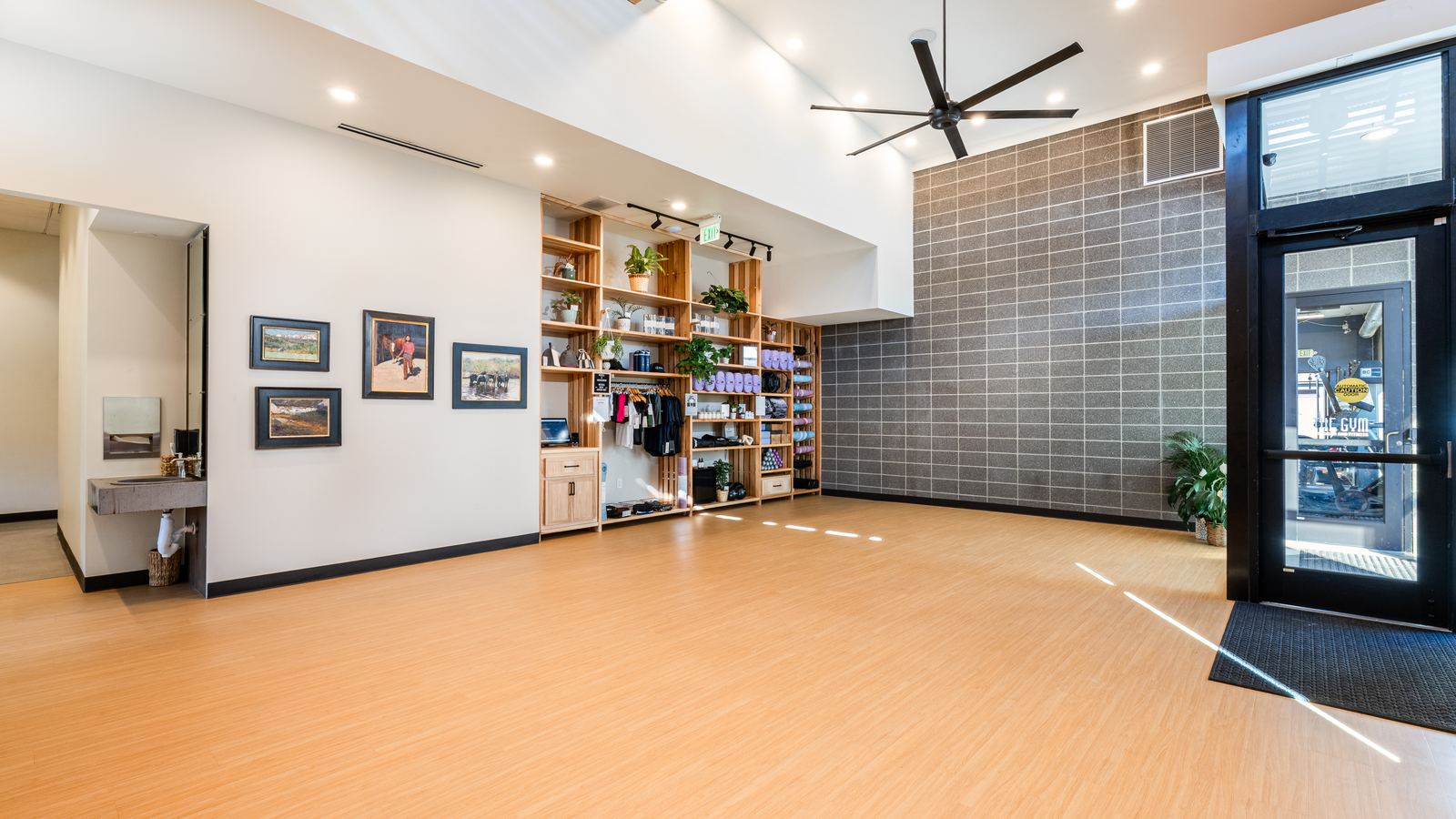
The term comes from the sociologist Ray Oldenburg, whose 1989 book The Great Good Place described the informal gathering spots where regulars see each other without planning to. The book is an argument, not a study. The question for this post is narrower: when researchers have measured third places, or the kind of regular participation they make possible, what did they find?
Our earlier post on community covered the large meta-analyses linking social connection to mortality, heart disease and dementia. This one looks at the places and groups where that connection happens.
When the places disappear
In July 1995 a heat wave killed hundreds of people in Chicago, and deaths were not spread evenly across the city. A 2006 study in the American Sociological Review combined census, mortality and survey data to ask why some neighborhoods fared worse than others.1
Affluent neighborhoods had lower heat-wave mortality. What explained the gap was commercial decline: neighborhoods where the stores and businesses older residents would actually visit had closed or run down. Measures of social networks and collective efficacy did not explain heat-wave deaths, although collective efficacy was linked to lower mortality in ordinary July weeks.1
The point is not that a corner store prevents heatstroke. It is that places people go to every day are part of how they get seen, and when those places close, that goes with them.
Having one, and how people rate where they live
A national US telephone survey of 477 adults asked a simple open-ended question: where in your neighborhood can you go to chat informally with people? 29% could not name anywhere. Coffee shops were the most common answer.2
People who could not name a third place rated their neighborhood’s quality of life lower (r = −0.20), and the link held after controlling for demographics, population and diversity (partial r = −0.17).2 That is a modest correlation, the survey had a 27% cooperation rate, and quality of life is not a health outcome. It is worth knowing about. It is not strong evidence on its own.
Belonging to something regularly
Stronger data comes from Japan, where the JAGES cohort has followed tens of thousands of older adults. One analysis tracked 12,951 adults aged 65 and over for four years and recorded which kinds of organizations they took part in.3
- Taking part in one type of organization was associated with a lower risk of developing a functional disability: HR 0.83 (95% CI 0.73–0.95).
- Two types: HR 0.72 (95% CI 0.61–0.85).
- Three or more: HR 0.57 (95% CI 0.46–0.70).3
Of the eight organization types, sports groups showed the strongest single association: HR 0.64 (95% CI 0.54–0.81), ahead of hobby groups (0.75) and local community organizations (0.85).3
Exercising with others versus alone
An earlier analysis from the same cohort split 11,581 older adults into groups by how they exercised and followed them for four years. People who exercised regularly but did not belong to a sports group had a higher risk of functional disability than people who were active members of one: HR 1.29 (95% CI 1.02–1.64).4
When the researchers added social networks to the model, the difference shrank to HR 1.27 (95% CI 1.00–1.61) and was no longer statistically significant.4 The authors read that as a sign that part of the benefit of group exercise runs through the relationships it creates, not only through the exercise.
What people get from the regulars
Research on commercial third places has looked at why people form attachments to them. A 2007 study in the Journal of Service Research found that people who had lost social support elsewhere in their lives tended to get emotional support from the customers and staff at places they visited regularly, roughly in proportion to what they had lost.5
The places are thinning out
A 2022 survey of 1,630 US adults with an average age of 68 found they were spending more time at home than before the pandemic, and going less often to restaurants, gyms and arts venues. In follow-up interviews, participants described lasting effects on their physical, mental and social health.6
What the evidence does not show
It is almost all observational. Healthier people go out more. Some of what looks like the benefit of having a third place is likely the reverse: being well enough, and well-off enough, to have one.
Going is not the same as belonging. A systematic review of 39 studies on social capital and common mental disorders found that a person’s sense of trust and belonging was protective. Their actual participation in groups and activities showed no overall association.7 Showing up to a place, by itself, did not track with mental health. Feeling part of it did.
The strongest numbers come from older Japanese adults. The JAGES findings are large, prospective and well adjusted, but they may not transfer directly to a 35-year-old in Denver.
Group exercise is not better exercise. As our community post covered, a 2026 meta-analysis found group and individual exercise programmes produced statistically equivalent gains in physical activity. The case for doing it with other people is about the relationships, not the workout.
The bottom line
Neighborhoods that lose their everyday gathering places fare worse in a crisis. Older adults who take part in more kinds of groups, and sports groups in particular, are less likely to lose their independence over the following years. Part of that appears to come from the relationships the groups create.
The evidence is observational and does not prove that joining a group will make you healthier. It does suggest that a place where the same people see you every week, and where you feel you belong, is worth having.
Revel was built to be that kind of place. The class schedule is published two weeks out, and community events are on the calendar.
- Browning CR, Wallace D, Feinberg SL, Cagney KA. Neighborhood social processes, physical conditions, and disaster-related mortality: the case of the 1995 Chicago heat wave. Am Sociol Rev. 2006;71(4):661–678. doi.org
- Jeffres LW, Bracken CC, Jian G, Casey MF. The impact of third places on community quality of life. Appl Res Qual Life. 2009;4:333–345. doi.org
- Kanamori S, Kai Y, Aida J, et al. Social participation and the prevention of functional disability in older Japanese: the JAGES cohort study. PLoS One. 2014;9(6):e99638. doi.org
- Kanamori S, Kai Y, Kondo K, et al. Participation in sports organizations and the prevention of functional disability in older Japanese: the AGES cohort study. PLoS One. 2012;7(11):e51061. doi.org
- Rosenbaum MS, Ward J, Walker BA, Ostrom AL. A cup of coffee with a dash of love: an investigation of commercial social support and third-place attachment. J Serv Res. 2007;10(1):43–59. doi.org
- Finlay J, Meltzer G, O’Shea B, Kobayashi L. Altered place engagement since COVID-19: a multi-method study of community participation and health among older Americans. Wellbeing Space Soc. 2024;6:100184. doi.org
- Ehsan AM, De Silva MJ. Social capital and common mental disorder: a systematic review. J Epidemiol Community Health. 2015;69(10):1021–1028. jech.bmj.com
This article is for general education and is not medical advice. Persistent loneliness, low mood or withdrawal can be symptoms of a treatable condition. If that describes your situation, it is worth raising with your physician or a licensed therapist.