Strength is the longevity drug
Muscular strength is one of the most reliable predictors we have of how long a person lives. The research is also unusually specific about how little of it you need.
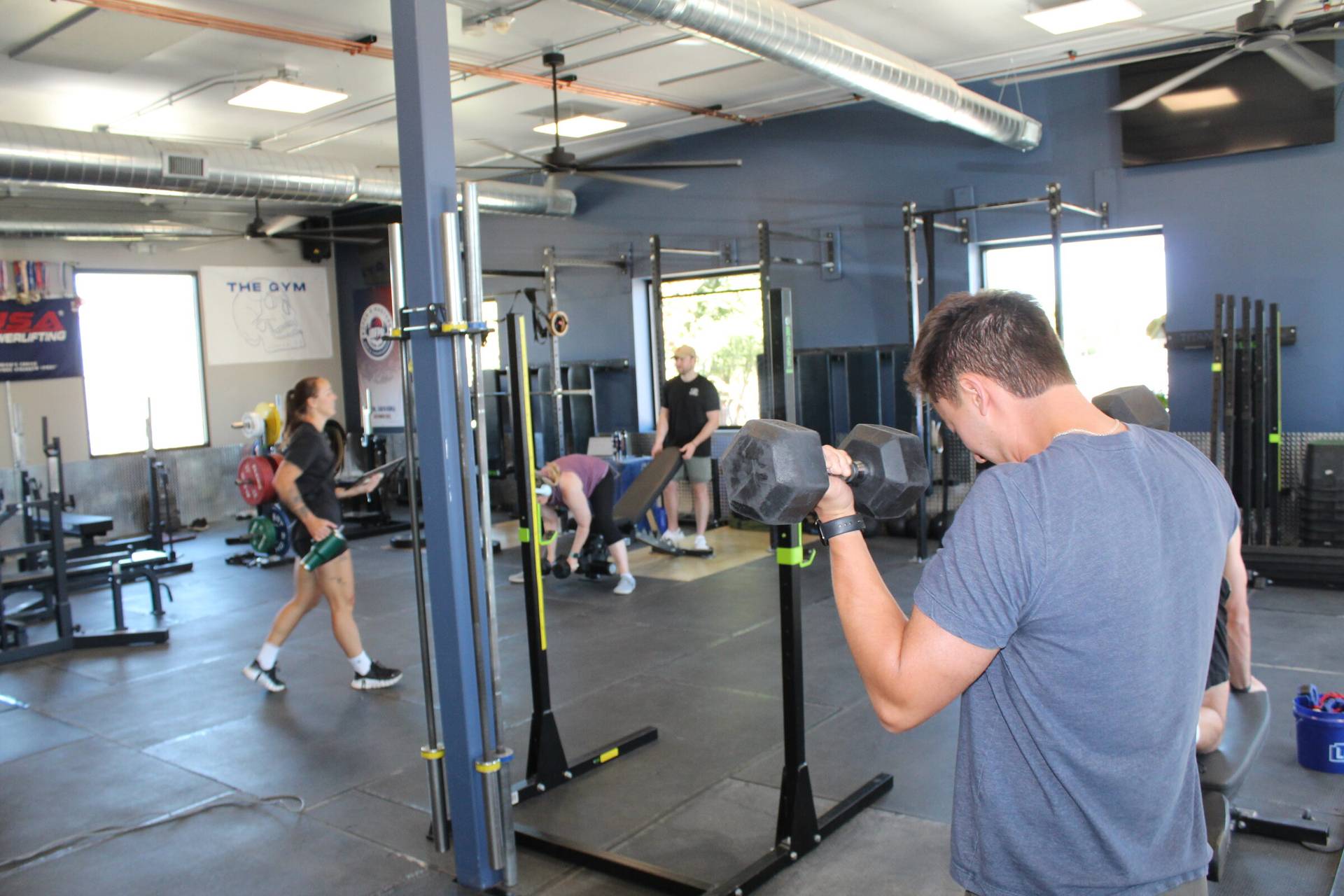
There is a version of the fitness conversation that is entirely about appearance, and there is a version that is about what your body can still do in forty years. This post is about the second one, because that's where the evidence is.
Over the last two decades, researchers have repeatedly gone looking for the simplest possible physical measurement that predicts how long someone will live. Not a genetic panel. Not an expensive scan. Something a clinician could do in a hallway in thirty seconds. What they keep landing on is muscular strength, and specifically how hard you can squeeze.
What the data actually shows
The largest synthesis on this pooled 38 studies covering roughly two million adults. People in the higher range of muscular strength had a 31% lower risk of death from any cause than people in the lower range (hazard ratio 0.69, 95% confidence interval 0.64–0.74).1
The PURE study, covering 139,691 people across 17 countries, high-income to low-income, found that grip strength predicted all-cause and cardiovascular death more strongly than systolic blood pressure did.2 Blood pressure is one of the most closely monitored numbers in medicine. Grip strength is monitored almost nowhere, and in that dataset it carried more predictive weight.
A separate dose-response analysis pooling 42 studies and more than three million participants put a number on the slope: every 5-kilogram decrease in grip strength was associated with a 16% higher risk of death from any cause.3
None of this is a claim that grip strength is magic. A hand dynamometer is a proxy: a cheap, reliable window into total-body muscle and the nervous system driving it. What the research is really tracking is how much functional tissue you've kept, and how well you can call on it.
The dose is much smaller than you'd guess
This is the part most people get wrong, and it's the most useful finding in the whole literature.
A 2022 systematic review and meta-analysis in the British Journal of Sports Medicine pooled 16 cohort studies to ask how much muscle-strengthening activity is actually associated with living longer. The answer: 30 to 60 minutes per week was associated with a 10–17% lower risk of all-cause mortality, cardiovascular disease, total cancer, and diabetes.4
Two details make that finding land harder.
First, the association was independent of aerobic activity. Lifting wasn't standing in for cardio, and cardio didn't cover for the absence of lifting. They appear to be doing different jobs.
Second, the curve was J-shaped. Benefit accumulated quickly up to about an hour a week, and then flattened. The analysis found no conclusive evidence that going beyond an hour reduced risk further. That is not an argument against training more if you love it. It is an argument against believing that anything less than five days a week is pointless.
Two sessions a week, done properly, sits inside the window where most of the measured benefit lives.
Why muscle would do this
Association alone doesn't explain mechanism, but the physiology isn't mysterious. Skeletal muscle is the body's largest site of glucose disposal, which ties it directly to metabolic health. Loading bone through resistance training is one of the few stimuli that meaningfully influences bone density. And the ability to produce force quickly is what separates a stumble from a fall, which matters enormously, because in older adults a fractured hip is frequently the event that ends independent living.
Muscle isn't decoration on top of health. It's an organ system with a job.
Starting late still works
The most quoted study in this field is also one of the oldest, and it's worth knowing about.
In 1990, researchers put ten frail nursing home residents, average age 90 and the oldest 96, through eight weeks of high-intensity resistance training. Among the nine who completed it, strength increased by an average of 174%. Mid-thigh muscle area grew 9%. Walking speed improved 48%.5
Ten people is a small study, and it was never meant to be the final word. But the direction has held up across three decades of subsequent work: the capacity to adapt to training does not switch off with age. It is still there at 90, in people who had been considered too frail to train at all.
Which reframes the usual question. It isn't whether you're too old to start. It's how much function you'd like to still have available later.
What this looks like in practice
You do not need a complicated program to get inside the range these studies describe.
- Two sessions a week, 30 to 45 minutes. That's the evidence-backed floor, not a compromise.
- Compound movements. A squat, a hinge, a push, a pull, and a carry cover almost everything. Machines are fine. Barbells are fine. The pattern matters more than the equipment.
- Progressive load. The adaptation comes from the demand increasing over time. Same weight forever means the stimulus fades.
- Close enough to hard. The last two or three repetitions of a set should be genuinely difficult. That's where the signal is.
- Consistency over intensity. Two sessions a week for ten years beats six sessions a week for five weeks, by a margin that isn't close.
If you've never trained before, the single highest-value thing you can do is have someone competent watch you move for an hour. Not because lifting is dangerous, since it compares favorably to most recreational sport, but because good positions learned early are the difference between training for decades and training until something hurts.
Nobody walks in here asking to live longer. When your friend calls and wants to hike a 14er on a day’s notice, you want to be able to say yes. People want to do what they love without thinking twice about it. The longevity part is just what happens on the way.
Brandon, The Gym at Revel
That's the part the mortality statistics don't capture. A hazard ratio is an abstraction. Saying yes to the 14er is not.
The honest caveats
Nearly everything above comes from observational research. These are large, careful, long-running cohort studies, and they consistently point the same way, but they show association, not proof of cause.
Two limitations are worth naming. Reverse causation is a real concern: undiagnosed illness can reduce strength years before it becomes visible, which would make weak people look like they died because they were weak. And healthier people are more likely to strength train in the first place, which good studies adjust for and can never fully eliminate.
What pushes this past correlation-spotting is the dose-response relationship. When more of something is associated with progressively lower risk, in a consistent shape, across dozens of independent cohorts and millions of people, that is the pattern researchers look for when causation is plausible. Combine it with the controlled trial evidence that resistance training measurably improves strength, muscle mass, bone density, insulin sensitivity, and functional mobility, and the case is about as strong as this kind of question allows.
It's still worth saying plainly: no one has run a thirty-year randomized trial where half the participants were assigned to never lift anything. No one ever will.
The bottom line
Thirty to sixty minutes a week. Independent of your cardio. Associated with meaningfully lower risk of dying from the things that most commonly kill people. Effective at 30, and still effective at 90.
There is no supplement, protocol, or emerging therapy in the wellness industry with an evidence base that comes close, and this one is available on Tuesday, in a room ten minutes from your house.
If you want a hand getting started, The Gym at Revel runs intro sessions for exactly this. Come pick something heavy up off the floor.
- García-Hermoso A, Cavero-Redondo I, Ramírez-Vélez R, et al. Muscular strength as a predictor of all-cause mortality in an apparently healthy population: a systematic review and meta-analysis of data from approximately 2 million men and women. Arch Phys Med Rehabil. 2018;99(10):2100–2113. Link
- Leong DP, Teo KK, Rangarajan S, et al. Prognostic value of grip strength: findings from the Prospective Urban Rural Epidemiology (PURE) study. The Lancet. 2015;386(9990):266–273. Link
- Thresholds of handgrip strength for all-cause, cancer, and cardiovascular mortality: a systematic review with dose-response meta-analysis. Ageing Res Rev. 2022;82:101778. Link
- Momma H, Kawakami R, Honda T, Sawada SS. Muscle-strengthening activities are associated with lower risk and mortality in major non-communicable diseases: a systematic review and meta-analysis of cohort studies. Br J Sports Med. 2022;56(13):755–763. Link
- Fiatarone MA, Marks EC, Ryan ND, Meredith CN, Lipsitz LA, Evans WJ. High-intensity strength training in nonagenarians: effects on skeletal muscle. JAMA. 1990;263(22):3029–3034. Link
This article is for general education and is not medical advice. If you have a heart condition, uncontrolled blood pressure, a recent injury, or you're unsure whether resistance training is appropriate for you, talk with your physician or a physical therapist before starting.